How to Owner-Train a Service Dog in North Dakota: A Step-by-Step Plan
This page explains the law in general terms. It is not legal advice. For a specific situation, contact the agency listed on this site or an attorney.
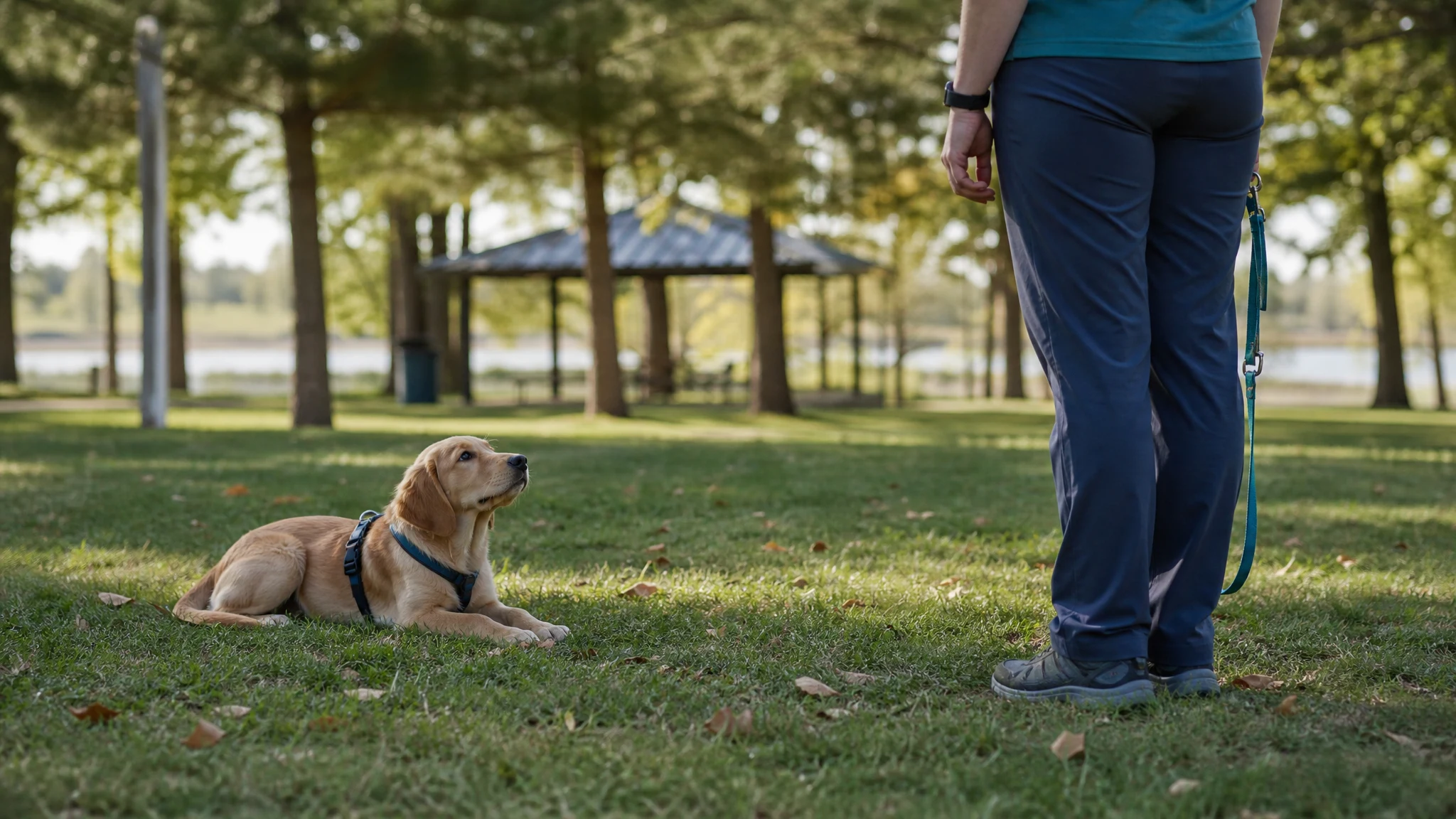
Many people with disabilities in North Dakota want to train their own service dog. It is a big project that takes many months, steady practice and honest decisions about whether a particular dog is right for the job.
This guide walks through the stages in order: screening, foundation obedience, socialization, task training and public access work. At each stage it explains what North Dakota law and the ADA say, so you know where you stand. It covers how to train a service dog in a humane, reward-based way, and where a professional trainer is worth the cost.
Key takeaways
- ADA.gov defines a service animal as a dog that has been individually trained to do work or perform tasks for a person with a disability. The definition does not say who has to do the training, so an owner trained service dog can qualify.
- North Dakota law (N.D. Cent. Code ch. 25-13) covers a service animal in training separately. It sets conditions for the trainer, including notifying the onsite manager and wearing a photo ID card from a nationally recognized service animal training program.
- There is no official service dog registry or required certification under the ADA. You do not need to register your dog, and an online registration is not legal proof.
- Use reward-based methods in line with the American Veterinary Society of Animal Behavior (AVSAB). Shock, prong and choke collars and dominance methods have no place in service dog work.
- A professional trainer is a smart investment for task training and public access work, even if you do the daily work yourself.
In this guide
- What the law says about owner-training in North Dakota
- Stage 1: Temperament and health screening
- Stage 2: Foundation obedience
- Stage 3: Socialization
- Stage 4: Task training
- Stage 5: Public access work
- Costs, alternatives, housing, work and complaints
- Sources
What the Law Says About Owner-Training in North Dakota
Start with the legal picture, because it shapes every later stage.
The federal definition
ADA.gov, in its Frequently Asked Questions about Service Animals and the ADA, says a service animal is a dog that has been individually trained to do work or perform tasks for an individual with a disability. Two parts of that sentence matter. The animal must be a dog, and it must be trained to do something specific that relates to your disability.
Emotional support, therapy and comfort animals are not service animals under the ADA. A dog that calms you by being near you is not the same as a dog trained to perform a task, such as interrupting a panic episode, retrieving a dropped item or bracing for balance.
The North Dakota definition
North Dakota law, in N.D. Cent. Code 25-13-01.1 as reproduced by the Animal Legal & Historical Center at Michigan State, defines a service animal as a dog trained to do work, perform tasks, or provide assistance for the benefit of an individual with a disability. Under the state definition it is dogs only.
Dogs in training
Here is where owner-trainers need to pay attention. The ADA definition describes a dog that has already been trained, so the state rules on dogs in training matter during the training period. Under N.D. Cent. Code 25-13-02.1, as reproduced by the Animal Legal & Historical Center, access for a service animal in training is tied to a "trainer." The conditions are:
- The trainer notifies an onsite manager.
- The trainer wears a photo ID card issued by a nationally recognized service animal training program.
- The trainer is liable for any damage the animal causes.
- After notice, the manager may not deny admission without good cause.
That photo ID condition may be hard for a person training their own dog without a program. The statute as summarized does not say how an independent owner-trainer meets it. Read the chapter yourself at ndlegis.gov, and ask the North Dakota Department of Labor and Human Rights how it applies to you. Until you are sure, treat training outings as a courtesy request to the business, not a right.
Other state rules to know
Under N.D. Cent. Code 25-13-02, a person with a disability may be accompanied by a service animal in places of public accommodation without extra charge, but is liable for damage the animal causes. Section 25-13-04 makes denying or interfering with admission or use of public places a class A misdemeanor.
Section 25-13-02.2 makes it an infraction to knowingly claim falsely that a pet is a service animal to gain admission to a public place or obtain a reasonable housing accommodation. The fine amount was not confirmed, so check ndlegis.gov for the current penalty.
This is general information, not legal advice. For questions about your situation, contact the agency listed at the end of this guide.
Stage 1: Temperament and Health Screening
The most important decision in owner-training comes before any training starts: is this dog suited to the work? Many dogs that make wonderful pets would not be comfortable or reliable as a service dog, and that is nothing to be ashamed of.
What to look for in temperament
A working dog needs to stay steady in places that are busy, loud or unpredictable. As you evaluate a puppy or adult dog, ask yourself:
- Does the dog recover quickly after a startle, or stay rattled?
- Is the dog interested in people without being pushy or fearful?
- Does the dog want to work with you and take food or play as a reward?
- Can the dog settle and rest calmly when nothing is happening?
- Is the dog free of aggression toward people and other dogs?
If you are unsure, ask a professional trainer to assess the dog. Breed-specific advice varies, so check with a breed club or a trainer you trust before assuming a breed will suit your needs.
Health screening
A service dog may work for years, so physical soundness matters, especially for mobility tasks that put weight on the dog's joints. Talk with your own veterinarian about vaccinations, parasite prevention, spay or neuter timing, and whether any joint, eye or heart screening makes sense for your dog and the work you plan.
Be honest about your own needs
Think about the tasks you need help with, your daily energy, your home and your budget. A dog that must travel, wait quietly and work in all weather is a long commitment. North Dakota winters are part of that picture, so consider how the dog will handle cold, ice and salted sidewalks.
Legal tie-in: At this stage the dog is a pet in training, not yet covered as a service animal. Nothing in the ADA or in N.D. Cent. Code ch. 25-13 gives access rights to a dog that is only being evaluated. Keep screening outings to places that welcome pets.
Stage 2: Foundation Obedience
Foundation skills are the base for everything else. They are also the stage where owner-trainers can do the most of the work at home.
Core skills
- Name response and eye contact
- Sit, down, stand and stay
- Loose-leash walking
- A reliable recall
- Leave it and drop it
- Settling on a mat or under a table
- Calm greetings, with no jumping
- Waiting at doors and thresholds
Reward-based methods
Modern service dog training relies on rewarding the behavior you want. The American Veterinary Society of Animal Behavior (AVSAB) supports reward-based training and advises against punishment-based tools and dominance theory.
In practice that means using food, toys and praise to mark and pay for good choices. Keep sessions short, five to ten minutes at first. End while the dog is still keen. Do not use shock, prong or choke collars, alpha rolls or scruffing. These methods can create fear and stress, and a fearful dog is a poor candidate for service work.
Build in small steps
Teach each skill in a quiet room, then in the yard, then with mild distractions. Raise difficulty gradually. If the dog fails, make the task easier instead of repeating it with frustration.
Legal tie-in: Foundation work happens mostly at home, where access law does not come into play. If you visit a store or park to practice, remember that a pet dog in training has no automatic right of entry. Go where dogs are allowed.
Stage 3: Socialization
Socialization means helping the dog become comfortable with the world: people, surfaces, sounds, vehicles, other animals and new places. The goal is a dog that is neutral and unbothered, not one that is excited by everything.
What to introduce
- Different floors, such as tile, metal grates and carpet
- Elevators, automatic doors and stairs
- Shopping carts, wheelchairs, strollers and walkers
- People of different ages, with hats, uniforms or mobility aids
- Car rides and, if you will need them, buses or other transport
- Winter conditions such as snow, ice and heavy coats and boots
Pace and consent
Let the dog watch from a distance and approach at its own speed. Pair new things with treats. If the dog freezes, hides or shows stress, add distance and try again later. Pushing a worried dog into a scary situation can make fear worse.
Teach the dog to ignore strangers and other dogs. Ask friends to practice walking past without greeting. A service dog that pulls toward every person is not ready to work.
Where to practice
Start with pet-friendly places and quiet outdoor areas. Many pet supply stores allow leashed dogs, but policies differ, so call ahead.
Legal tie-in: This is the stage where many owner-trainers want to bring the dog into stores, restaurants and other businesses. Section 25-13-02.1 sets out the conditions for a trainer with a service animal in training: notice to the onsite manager, a photo ID card from a nationally recognized service animal training program, and liability for damage. If you cannot meet those conditions, ask permission and accept a no. Do not present a dog in training as a fully trained service dog. Section 25-13-02.2 makes a knowing false claim that a pet is a service animal an infraction.
Stage 4: Task Training
Task training is what separates a service dog from a well-behaved pet. Under the ADA.gov definition, the dog must be individually trained to do work or perform tasks for a person with a disability. The task must connect to your disability.
Examples of tasks
Tasks vary with each handler's needs. Common categories include:
- Mobility: retrieving dropped items, opening doors, providing bracing support
- Medical alert or response: alerting to a change, fetching medication or a phone
- Psychiatric: interrupting repetitive behaviors, creating space in crowds, turning on lights
- Hearing: alerting to sounds such as alarms or a knock
Being present, giving comfort or providing emotional support alone does not count as a task under the ADA.
How to teach a task
Break the task into small steps and reward each step. For example, to teach a retrieve you might reward looking at the object, then touching it, then picking it up, then holding it, then bringing it to your hand. Add a cue only once the behavior is reliable. Then practice in more places and with more distractions.
Write down each task, the cue and the steps. A training log helps you spot progress and gaps. It also helps if someone asks what the dog does.
Why a professional trainer helps here
Task training is where owner-trainers most often get stuck. A good trainer can shape tasks that fit your body and condition, fix timing errors and spot early signs of stress in the dog. Look for a trainer who uses reward-based methods and has experience with service dog work. I have no list of North Dakota trainers to offer, so ask your veterinarian, ask a service dog program for referrals, and ask any trainer about their methods before you hire.
Legal tie-in: The ADA does not require a particular program, test or document for your dog. It does expect that the dog is actually trained to perform the tasks. Under ADA.gov guidance, staff at a business may ask only two questions: whether the dog is a service animal required because of a disability, and what work or task the dog has been trained to perform. Be ready to answer the second one clearly and briefly.
Stage 5: Public Access Work
Public access work teaches the dog to behave reliably in stores, clinics, restaurants and other places where you need it. It builds on everything before it.
Skills for public settings
- Walking close and calmly through crowds
- Settling under tables and chairs for long periods
- Ignoring food on the floor, dropped items and other animals
- Staying quiet, with no barking or whining
- Staying clean and well groomed, and toileting on cue before outings
- Performing tasks even when distracted
Build slowly
Begin with short, easy trips and gradually lengthen them. Keep an exit plan. If the dog is stressed or struggling, leave and go back a step in training. A dog that is not ready should not be pushed into work.
Manners and control
Even with legal access, a business may ask you to remove a dog that is out of control or not housebroken. ADA.gov says the handler must keep the dog under control. Practice until you can do that without strain.
Once the dog is fully trained
Once the dog is trained to perform tasks for your disability, the access rules for service animals apply. Under N.D. Cent. Code 25-13-02, you may be accompanied by your service animal in places of public accommodation without extra charge, and you are liable for damage the animal causes. Under 25-13-04, denying or interfering with that access is a class A misdemeanor. The federal ADA also applies. You can find its guidance on the ADA.gov service animal FAQ.
Remember that there is no official registry. Vests and ID cards are optional, and an online registration does not prove anything legally. Do not pay anyone for a "certificate."
Costs, Alternatives, Housing, Work and Complaints
Costs
Owner-training avoids program fees, but it is not free. Expect to pay for veterinary care, food, equipment, classes and any professional help. I cannot give reliable prices, so get quotes from trainers and clinics directly. For a wider look at programs and costs, see our guide to service dog training in North Dakota: laws, programs and costs.
If owner-training is not the right fit
Some people find that a program is a better path. Service Dogs for America, formerly Great Plains Assistance Dogs Foundation, is based in Jud, ND. Its site says it is accredited by Assistance Dogs International to train mobility assistance, emergency medical response and PTSD service dogs. Its application page publishes no prices, mentions staffing shortages, and says applicants must live in the lower 48 states and travel to the Jud campus. Contact the program for costs and wait times.
Two Minnesota programs also work with veterans: Patriot Assistance Dogs in Detroit Lakes and Believet Canine Service Partners in Northfield. Check with each for eligibility, cost and wait times.
The North Dakota Department of Veterans Affairs has a Service Dog Grant for ND Veterans with PTSD. Its page lists these requirements: North Dakota residency, a PTSD diagnosis, counseling or therapy, and a doctor's recommendation for a PTSD service dog. Dogs come from Service Dogs for America. The page is undated, so ask the department whether funding is currently available.
Housing
N.D. Cent. Code 47-16-07.5, as quoted by the Animal Legal & Historical Center, lets a landlord of a no-pets rental require reliable supporting documentation when a tenant claims a disability-related need for a service or assistance animal. Documentation cannot be required when the disability or need is readily apparent or already known to the landlord. Section 47-16-07.6 addresses fraudulent disability documentation. A 2025 bill, SB 2193, would have amended 25-13-01.1 and 47-16-07.5, but according to the North Dakota Legislative Assembly it failed in the House. Confirm the current text of both sections before relying on them.
Work
N.D. Cent. Code 25-13-05 sets state policy that people who are blind, visually impaired or otherwise disabled are to be employed in state service and other publicly funded employment on the same terms as others, unless the disability prevents the work. The North Dakota Human Rights Act, chapter 14-02.4, also prohibits employment discrimination based on disability. If you need your service dog at work, ask your employer about it early and in writing.
If you are denied access
The North Dakota Department of Labor and Human Rights, Human Rights Division, takes complaints about public accommodation, housing and employment discrimination. Its address is 600 East Boulevard Ave Dept 406, Bismarck, ND 58505-0340. Phone 701.328.2660 or toll-free 1-800-582-8032. See How to File a Discrimination Complaint in North Dakota. Filing deadlines apply, so contact the agency promptly to learn the current time limits.
Sources
- ADA.gov, Frequently Asked Questions about Service Animals and the ADA
- Animal Legal & Historical Center, North Dakota Consolidated Assistance Animal/Guide Dog Laws
- North Dakota Century Code, chapter 25-13
- North Dakota Legislative Assembly, SB 2193 bill overview
- North Dakota Department of Labor and Human Rights, How to File a Discrimination Complaint
- North Dakota Department of Veterans Affairs, Service Dog Grant for ND Veterans with PTSD
- Service Dogs for America